




Understanding and perceiving luxury in contemporary tourism has changed significantly in recent years. Quality time, discretion, and the ability to adapt a stay to personal habits have become more important than demonstrative elements of luxury.
In this context, the distinction between boutique and luxury hotels becomes clearer. Boutique hotels emphasize style, atmosphere, and a strong identity, often shaped through design and local context. Luxury hotels include these elements but elevate them through consistent, unobtrusive service that accompanies the guest throughout the entire stay, with a high level of personalization and discretion.
What Is a Luxury Hotel – A Contemporary Definition of Luxury
Today, a luxury hotel is defined primarily by the quality of the experience, not merely by a label or architectural style. Contemporary luxury is reflected in thoughtfully designed spaces, a sense of ease throughout the stay, and consistent standards applied at every stage of the guest journey.
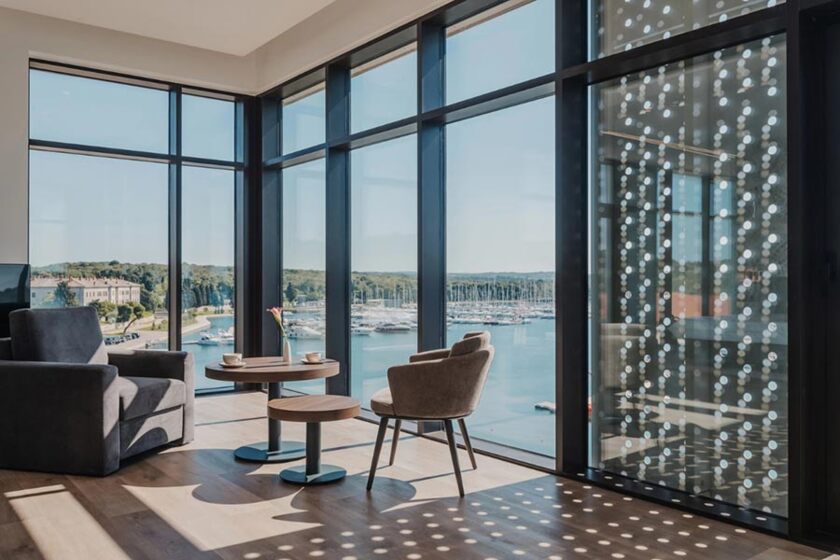
At Hotel Monumenti, this approach is visible in interiors that subtly reflect the cultural and historical heritage of Pula and Istria, creating a strong spatial identity and a sense of connection with the destination. Spacious rooms, natural light, and open sea views shape an environment where comfort, authenticity, and refined enjoyment naturally complement one another.
Modern luxury is further expressed through the integration of technology and comfort. Smart systems, discreet room access, premium bathroom fittings, and carefully selected materials allow guests to tailor their stay to their own rhythm, with an emphasis on privacy and tranquility.
The fusion of historical monumentality and contemporary comfort creates a form of luxury rooted in place and context. A luxury hotel does not exclude boutique character; it surpasses it. When intimacy and authenticity combine with a high level of service, strong infrastructure, and flawless organization, the result is an experience remembered for its ease, security, and complete alignment with the guest’s expectations.
Why Is There Confusion Between Boutique and Luxury Hotels?
The terms boutique hotel and luxury hotel represent different levels of meaning. In Croatia, the only legally binding hotel classification system is the star rating system, which defines minimum technical and operational standards. Although this system does not recognize boutique hotels as a separate category, luxury is implicitly defined through the highest level of classification. In practice, however, the term “luxury” functions as an industry standard that often exceeds formal criteria.

In contemporary hospitality, a boutique hotel is not a category of quality but a descriptive and market-driven term. It typically refers to smaller hotels with distinctive design, strong character, and a more intimate atmosphere. The focus is on style, aesthetics, and identity, often closely linked to the local context. The term boutique does not necessarily imply a higher level of service, comfort, or a broader range of amenities; it primarily describes the concept and size of the property.
By contrast, a luxury hotel is defined by the level of service, spatial quality, and overall experience, rather than by style or room count. In modern hospitality, luxury implies a high degree of personalization, privacy, tranquility, premium materials, refined gastronomy, and consistent quality across all aspects of the stay. For this reason, luxury operates as a global industry standard of expectation, often validated through international inspection systems, brand standards, or market reputation, rather than solely through star classification.
Boutique or Luxury – What Do Modern Guests Actually Seek?
Boutique hotels in Pula are typically smaller properties with a limited number of rooms, creating a sense of intimacy and a calmer atmosphere. They draw inspiration from the city’s historical and urban context, reflected in their architecture and design. This makes them attractive to guests seeking authentic ambiance, aesthetically curated spaces, and accommodation that differs from standardized hotel formats.
However, smaller capacity and more modest infrastructure often mean a limited range of additional facilities and less operational flexibility for high-level personalization. While the guest approach is warm and direct, the overall quality of experience depends on the hotel’s operational capabilities. As such, the boutique concept often suits shorter stays, business travelers, or guests who prioritize atmosphere over an elevated level of luxury.
Luxury hotels, on the other hand, respond to a different level of expectation. They are designed for guests who seek complete privacy, discretion, and impeccable service in every segment of their stay—from arrival to departure.
Ultimately, modern guests increasingly refuse to choose between aesthetics and service. They expect both to be fully aligned. Contemporary luxury emerges where an authentic destination identity and distinctive architecture are preserved, while service adapts to the guest quietly, precisely, and without unnecessary display.
How Does Luxury in Pula Differ from Other Destinations?
Unlike destinations that build luxury through monumental complexes, large capacities, and spectacular facilities, Pula offers a different context. Here, luxury stems from the rhythm of the city, its history, and its authenticity.
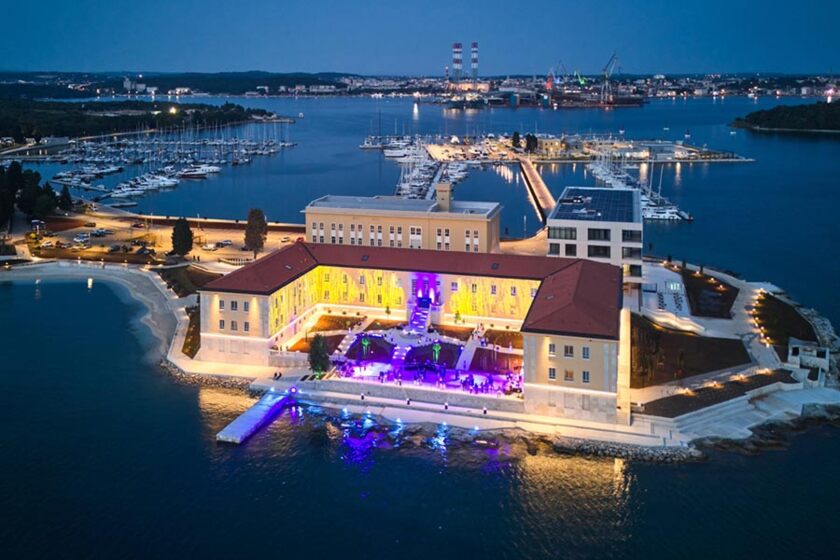
Accommodation that respects the original context enables an experience that is both refined and deeply rooted in the local narrative. This is a form of luxury that does not negate the past but naturally integrates it into an exceptional standard of comfort and service. In Pula, luxury becomes a synergy of experience in which history, architecture, and contemporary comfort merge into a unique stay.
When Does a Luxury Hotel Become the Right Choice?
Although a boutique hotel in Pula may satisfy the needs of shorter stays and design-oriented guests, there are situations in which such a concept is simply not sufficient. Guests staying longer, seeking a higher level of comfort, a wider range of facilities, and consistent service quality across all touchpoints increasingly choose luxury hotels. Luxury properties possess the infrastructure, team, and operational stability necessary for deeper personalization, more sophisticated gastronomy, and service flexibility without compromise.
It is in these details that the difference becomes visible. A luxury hotel does not offer only a beautifully designed space, but a holistic experience in which privacy, discretion, comfort, and quality are harmonized throughout the entire stay. When expectations extend beyond atmosphere and style, a luxury hotel becomes the optimal choice.
Hotel Monumenti – Luxury with Character
The uniqueness of Hotel Monumenti lies in the fusion of historical architecture and contemporary luxury. The authentic structure is not used as decoration, but as the foundation of the hotel’s identity, carefully enhanced with modern solutions, premium materials, and thoughtful design. Luxury here is not imposed; it is felt through space, silence, discretion, and a consistent level of service. It is precisely this balance that gives boutique character greater depth, while preserving luxury in a human and authentic dimension.
How to Choose the Right Hotel in Pula – A Brief Guide
Choosing a hotel in Pula largely depends on your perception of a quality stay. If you seek peace, quiet, and a sense of seclusion, spatial generosity and discretion become more important than stylistic expression alone. It is equally important to consider whether you are looking for functional accommodation or a complete experience that includes carefully curated service, gastronomy, and atmosphere.
Personalized service often marks the difference between a good stay and an exceptional one. Guests traveling for leisure, business, or a romantic escape have different needs, yet they share a common expectation: that the hotel adapts to them, not the other way around. It is in this sense of ease and continuity of quality that the true face of luxury is revealed.
Luxury is not a question of size or visual impression, but primarily of experiential quality. Contemporary luxury implies space, tranquility, impeccable service, and destination authenticity. With its historical context and understated rhythm, Pula naturally becomes a place that does not imitate luxury, but redefines it.
Ultimately, the right hotel choice is not about category, but about alignment—between space, service, and the way a guest wishes to experience their time at the destination.
