


Whether you are coming to Pula for a quick weekend getaway or planning a multi-day holiday combining thousand-year-old history, turquoise sea and outstanding Istrian cuisine, the same question arises: how can you make the most of your time?
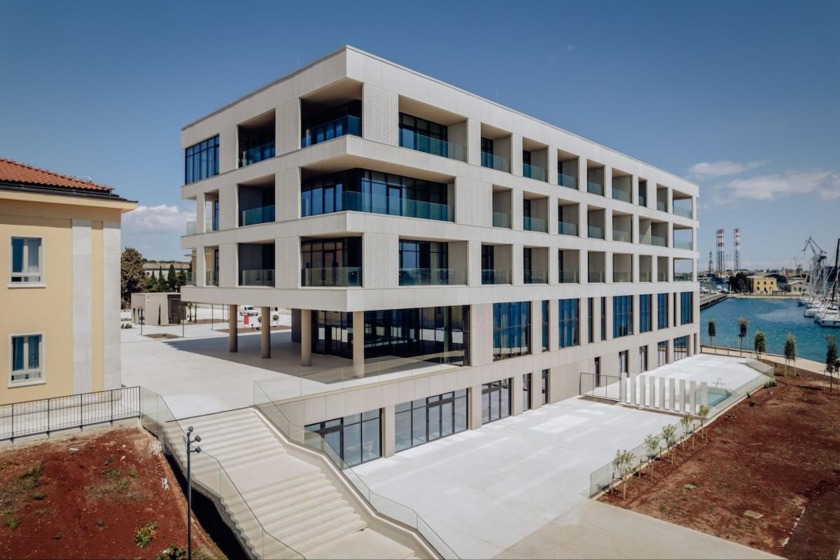
As a hotel that proudly preserves the heritage of this unique micro-location, Hotel Monumenti is situated right by the coast, overlooking Pula and the Brijuni Islands. Its location gives guests easy access to numerous Pula landmarks as well as attractions in the immediate vicinity of the hotel, making a stay here an excellent opportunity to explore the surroundings and the whole of southern Istria. We have prepared tried-and-tested itineraries for what to see in Pula in two, three or five days, tailored to every pace of travel.
Pula in 2 Days – Must-Sees for a Short Getaway
Two days in Pula are enough to experience its distinctive character, visit its most important historic monuments and enjoy its relaxed Mediterranean way of life.
Day 1: A Walk Through the Millennia, from the Arena to the Castle
Start your first day where history speaks loudest, in front of the Pula Arena. This impressive 1st-century Roman amphitheatre is the sixth-largest surviving Roman amphitheatre in the world and one of the best-preserved monuments of Roman architecture. Walk through its interior and underground spaces, where gladiators, animals and the equipment needed for Roman spectacles were once kept.
After your visit, walk towards the Arch of the Sergii (Golden Gate), an elegant Roman triumphal arch erected at the end of the 1st century BC in honour of members of the Sergii family. Today it stands at the entrance to the pedestrian zone of the old town and is one of Pula’s most famous photo spots.
Take a break at the Forum, the central square of old Pula, dominated by the beautiful Temple of Augustus. Originally dedicated to the goddess Roma and Emperor Augustus, the temple was built between 2 BC and AD 14. Today it is one of the best-preserved Roman temples on the Adriatic.
Then make your way through the stone-paved streets towards the hill crowned by the Kaštel, a 17th-century Venetian fortress. Today it houses the Historical and Maritime Museum of Istria, while its position offers panoramic views of Pula’s historic centre, harbour and surroundings.
End the day at one of the traditional Istrian taverns in the old town. Try homemade pljukanci with boškarin beef, Istrian prosciutto and cheeses, fresh fish or other dishes based on local ingredients. Gastronomy is one of the important parts of the Pula and Istria experience.
Day 2: Sea, Nature and the Most Beautiful Sunset
Devote your second day to the blue of Istria. Pula and its surroundings offer numerous beaches, from pebble coves to rocky swimming spots. If you want to stay close to the city, you can visit Valkane, which is also connected to the Lungomare promenade, or one of the beaches on Verudela.
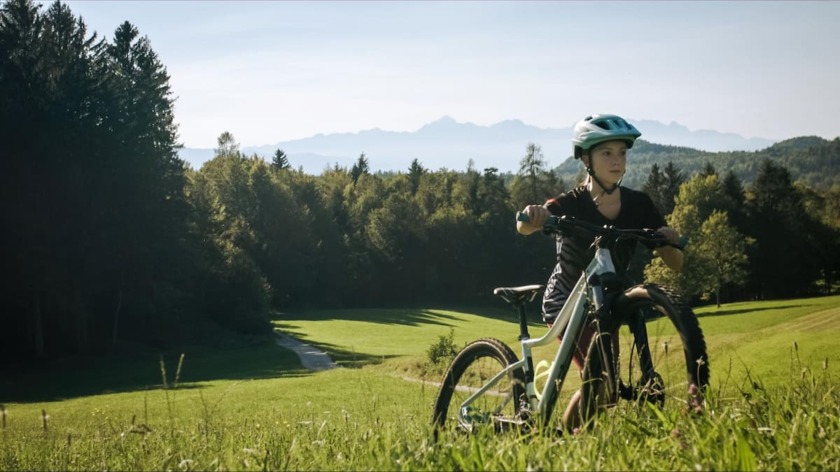
If you are looking for a more natural setting, head to Cape Kamenjak, the southernmost part of Istria, about ten kilometres from Pula. It is a protected landscape known as Lower Kamenjak and the Medulin Archipelago, famous for its indented coastline, hidden coves, clear sea, rocks and Mediterranean vegetation. The area is ideal for walking, cycling, kayaking, swimming and snorkelling, and fossilised dinosaur footprints can be seen at some locations.
Do not miss the iconic Safari Bar above Mala Kolombarica Cove, one of the best-known places to stop and take a break on Kamenjak.
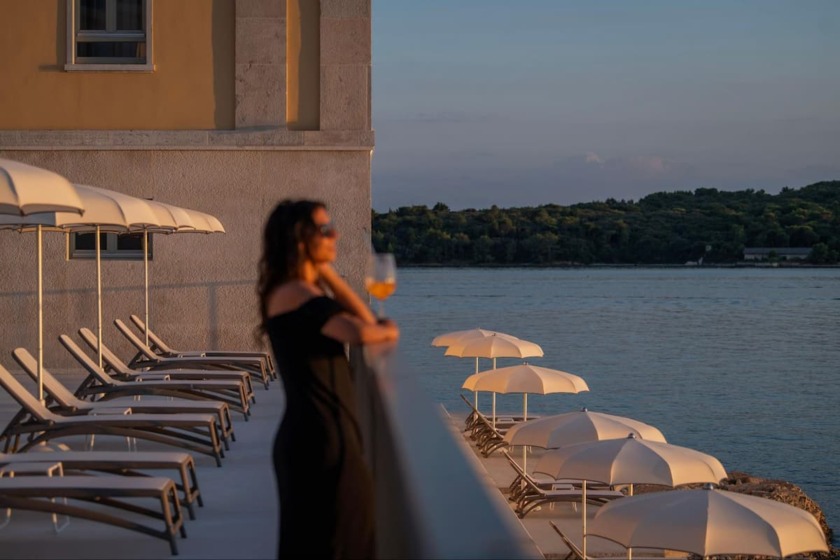
After an active day by the sea, return to Hotel Monumenti, located right on the coast at Cape Monumenti. In the early evening, relax with a glass of Istrian Malvasia and enjoy the sunset over Pula Bay.
Pula in 3 Days – Add Brijuni and the Sea
Day three gives you the opportunity to broaden your horizons and discover the natural and cultural richness that makes Pula one of the Adriatic’s most diverse destinations.
Day 3: Excursion to Brijuni National Park
Just a few kilometres from the Pula coast lies Brijuni National Park, a group of 14 islands and islets. Veliki Brijun can be reached by boat from nearby Fažana, and a trip there is an excellent way to spend a day in a completely different setting.
Veliki Brijun offers a unique combination of natural beauty, ancient history and fascinating natural phenomena. A tour of the island takes you through the Safari Park, home to various exotic and native animals in a peaceful Mediterranean setting. Lovers of antiquity will enjoy Verige Bay and the remains of a magnificent Roman villa whose construction began in the 1st century BC and whose splendour marked the golden age of Rome. The island also offers a magical encounter with the distant past of Earth, as you can see real fossilised dinosaur footprints left by dinosaurs that walked this area more than 100 million years ago. The story of the island’s longevity and tradition is completed by the Old Olive Tree, an impressive tree more than 1,600 years old that still bears fruit today.
You can explore the island on foot, by bicycle or as part of an organised tour, and it is precisely the combination of nature, archaeological heritage and a relaxed island rhythm that makes Brijuni the perfect continuation of your plan for what to see in Pula and its immediate surroundings on the third day of your stay.
Alternative for Day 3: Half-Day Trip to Picturesque Rovinj
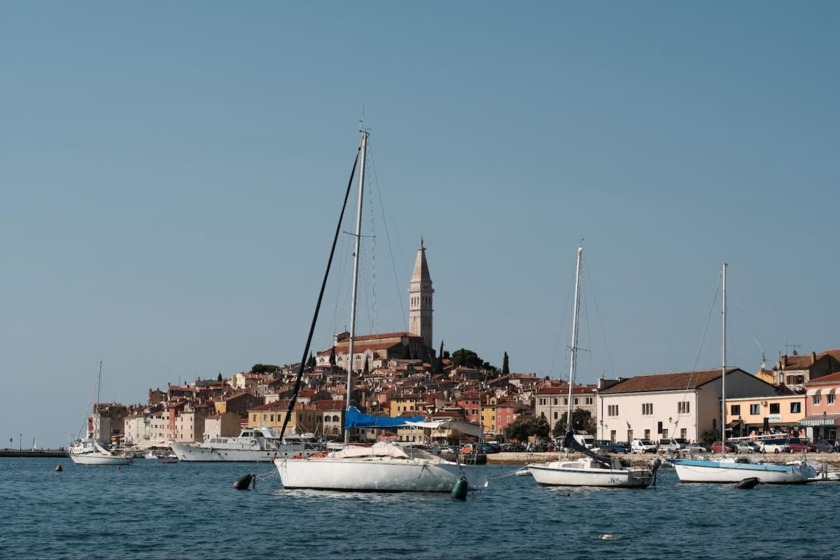
If you prefer exploring charming coastal towns, we recommend a trip to Rovinj, about a 40-minute drive from Pula, depending on traffic. Walk through its steep, paved streets, climb up to the Church of St Euphemia, explore the old town and enjoy art galleries and restaurants by the sea.
Pula in 5 Days – All of Istria Within Reach
Two additional days give you complete freedom to explore the magical Istrian hinterland, its acclaimed culinary scene and adrenaline-filled activities.
Day 4: Authentic Istria – Rovinj and Vodnjan
On your way north, stop in Vodnjan, a small town known for its long olive-growing tradition and outstanding Istrian extra virgin olive oils. Visit one of the local olive mills and learn about the differences between varieties and production methods. Vodnjan is also known for the Parish Church of St Blaise, which houses numerous relics and a famous collection of incorrupt holy bodies.
Continue towards Rovinj. Walk along the coast, explore the fishing harbour and old town, and enjoy lunch at a seaside restaurant. Rovinj offers a perfect combination of Mediterranean spirit, rich history and Istrian hospitality.
Day 5: The Istrian Hinterland – Motovun, Grožnjan, Wine Roads and Truffles
The Istrian hinterland is often compared with Tuscany, but it has its own completely authentic magic.
Perched on a hill, Grožnjan is known for its stone streets, art galleries and studios, as well as its rich musical tradition, which is especially prominent during the summer months.
The medieval hilltop town of Motovun is surrounded by Motovun Forest, known as a habitat for truffles. Walk along the Motovun walls, which offer views over the Mirna River valley and the surrounding Istrian hills.
Istria is home to excellent wine varieties such as Istrian Malvasia and Teran. Visit one of the family-run wineries around Motovun or Grožnjan and taste the wines with local specialities. If you are visiting during truffle season, be sure to take the opportunity to try dishes prepared with this prized Istrian ingredient.
For lovers of an active holiday wondering what to see in Pula and the surrounding area from an active perspective, the region offers a wealth of exciting possibilities. Exploring Cape Kamenjak by bicycle will take you along natural and gravel trails winding through fragrant Mediterranean vegetation, leading to hidden rocky coves and spectacular viewpoints. If you prefer adventures at sea, kayaking along the coast offers an unforgettable opportunity to explore hidden sea caves and cliffs, with special emphasis on the attractive Galebove Stijene location. For those drawn to the depths, the Istrian underwater world conceals a fascinating array of diving sites and historic shipwrecks. Among them, the famous Baron Gautsch near Rovinj stands out as one of the best-known wrecks in the northern Adriatic, while the waters of southern Istria offer numerous attractive micro-locations ideal for organised dives.
If you have a few hours left after sightseeing, you do not necessarily have to spend them visiting another landmark. Pula is a city that works best when you leave a little room for spontaneous exploration. Walk along Sergijevaca Street, stop at the Forum, sit down for a coffee or head towards the waterfront. If you are planning your trip during a festival, an evening out can be a great way to end a day of sightseeing. This is how Pula reveals its distinctive character: here, Roman heritage is not merely a backdrop, but part of the city’s contemporary life.
Art lovers may also enjoy the Lighting Giants, a light installation on the cranes of the Uljanik shipyard created by designer Dean Skira. After dark, the cranes become a kind of light show visible from Pula’s waterfront, creating a completely different experience of the city.
It is precisely this combination of history, sea, gastronomy, culture and nature that makes Pula a destination where even a short stay can become a fulfilling holiday, while five days provide enough time to discover the wider Istria region.
The Best Sights in Pula
For easier orientation and planning, here is a quick overview of the key attractions you simply should not miss during your stay:
Arena / Amphitheatre: An impressive symbol of the city and the sixth-largest surviving Roman amphitheatre in the world. In summer, it becomes a venue for concerts, film screenings and other cultural events, including the Pula Film Festival.
Temple of Augustus and Forum: The central historic square and one of the most important remains of ancient Pula. The Temple of Augustus was dedicated to the goddess Roma and Emperor Augustus.
Arch of the Sergii (Golden Gate): An elegant Roman triumphal arch from the end of the 1st century BC, associated with the former Golden Gate and now located at the beginning of the pedestrian zone of the old town.
Kaštel and the Historical and Maritime Museum of Istria: A 17th-century Venetian fortress on the central city hill, offering panoramic views of the historic centre and harbour.
Zerostrasse: A network of underground tunnels and shelters developed before and during the First World War, when Pula was an important Austro-Hungarian naval port. Today, part of the system is open to visitors.
Lighting Giants: A light installation by Dean Skira on the cranes of the Uljanik shipyard, which has become one of Pula’s distinctive evening sights.
Your Home in Pula: Heritage Atmosphere by the Sea
After a day filled with exploring ancient streets, cycling or tasting fine wines, the most important thing is to return to a place that offers complete comfort, peace and relaxation.
Hotel Monumenti is an ideal destination for anyone looking for the perfect combination of historic heritage and contemporary design, offering spectacular views, while its Heritage building adds a touch of the past as part of a former Austro-Hungarian military complex. This rich history is intertwined with luxury and comfort, making the hotel a perfect base for exploring Istria and relaxing to the sound of the waves.
Whether you are planning two, three or five days in Pula, you can always adapt the itinerary to your own pace. Because the best holiday is not the one where you try to see absolutely everything, but the one that makes you want to come back. See you on the coast!
