




Changes in guest behaviour clearly show that luxury today means far more than service alone. Modern travellers seek experience, story, and authenticity — they want to fully immerse themselves in a destination, not merely stay in it. This is precisely the approach embodied by Monumenti Heritage Hotel & Resort in Pula, where a stay brings together history and the contemporary.
Located on the grounds of a former Austro-Hungarian military barracks, Hotel Monumenti offers what modern luxury increasingly demands — real context and identity. The restored Heritage building preserves traces of the past and the cultural value of the space, while the contemporary Deluxe wing elevates that experience with premium comfort.
Unlike conventional hotels with uniform experiences and design, heritage hotels offer a uniqueness in which every room, detail, and space tells a story. At Hotel Monumenti, this is expressed through architecture, historical elements, and a gastronomy that reinterprets local Istrian tradition.
By repurposing a once-neglected military complex, Monumenti demonstrates how luxury tourism can actively participate in both the preservation of cultural heritage and the development of a destination. It is precisely this combination of authenticity, experience, and sustainability that is making heritage hotels like Monumenti an increasingly clear force shaping the future of luxury tourism.
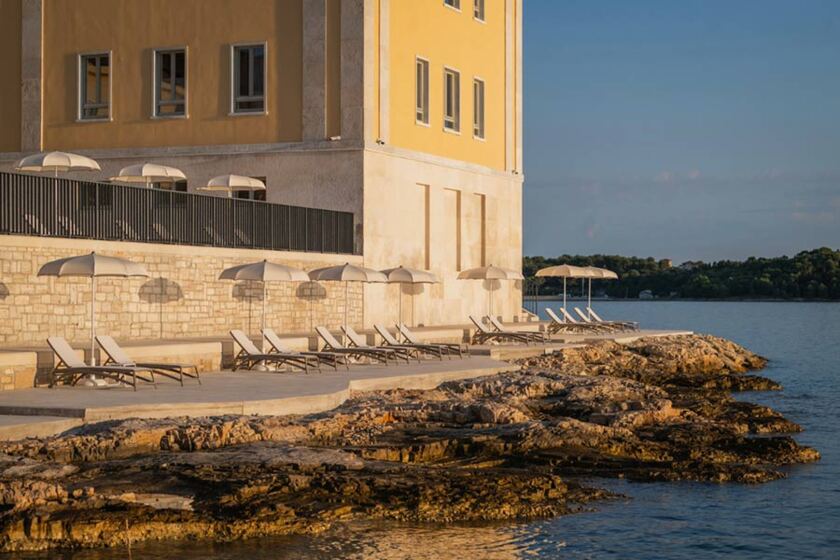
What Is a Heritage Hotel, Exactly?
A heritage hotel is a hotel located in a historic building of cultural, architectural, or historical significance. These may be former castles, palaces, villas, industrial facilities, or military barracks — spaces that through careful restoration have gained a new function while retaining their original identity. Such buildings are often protected and restored to strict conservation standards in order to preserve their authenticity and historical significance.
It is precisely this combination that makes every heritage hotel special. On one hand, the original architecture, details, and atmosphere of the past are preserved; on the other, guests are offered comfort — from beautifully designed rooms to exceptional service.
Staying in a heritage hotel means immersing yourself in the story of a destination. Every element — from the façade and floors to the layout of the rooms — reflects the era in which the building was created, delivering an authentic sense of place and a deeper connection with local culture.
Authenticity as the New Currency of Luxury
Millennials and Gen Z are increasingly choosing travel with deeper meaning over conventional holidays — journeys that offer a sense of connection, identity, and a genuine escape from everyday life. Luxury is no longer measured by the level of service, but by the quality of the experience.
Modern guests seek what is increasingly described as a "sense of place." They do not want generic interiors and uniform experiences, but authenticity rooted in location, history, and culture. They want to understand where they are, feel the architecture, taste local gastronomy, and experience an atmosphere with real context. A heritage hotel in this sense offers exactly what the contemporary traveller seeks — a fusion of past and present that creates a powerful emotional connection with the destination.
Millennial and Gen Z generations choose hotels that reflect their values, aesthetics, and lifestyle, making decisions through the experiences of others, social media, and authentic recommendations. This is precisely why boutique and heritage hotels are increasingly coming into focus — they offer curated, unique, and visually compelling experiences that can be lived and shared.
Their expectations are also clearly defined. Technology must be seamless — from digital check-in to fast Wi-Fi — while service must be personalised and tailored to individual preferences, with sustainability as an essential requirement. Local architecture, the heritage of the space, and the interpretation of tradition through gastronomy and programming create an experience that transcends a conventional stay. Authenticity thus becomes the new currency of luxury, and the heritage hotel one of its most important carriers — bringing together everything the modern guest seeks: authenticity, design, local narrative, cultural context, and contemporary comfort.
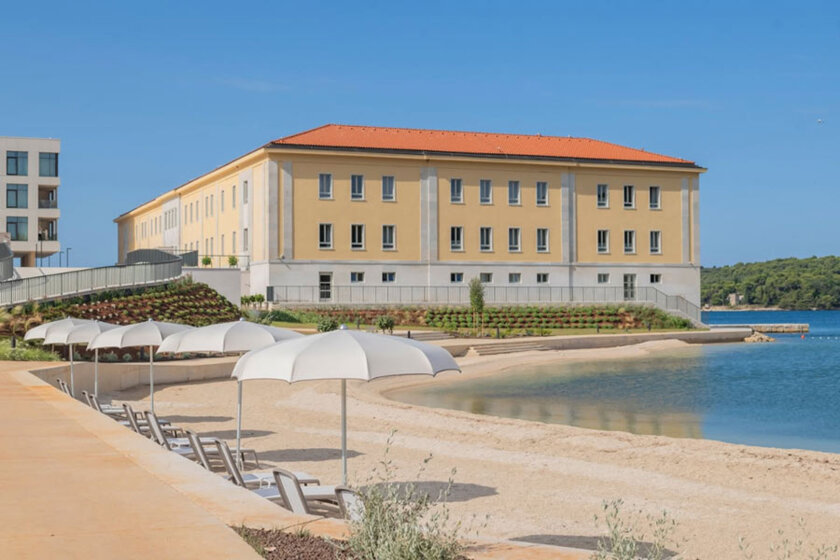
Heritage Preservation + Sustainability
At a time when sustainability is becoming one of the key criteria in tourism, the concept of so-called "adaptive reuse" — the repurposing of existing buildings rather than constructing new ones — is gaining increasing importance. This model represents one of the most effective ways of reducing the ecological footprint, as it conserves resources, reduces construction waste, and extends the lifecycle of already existing structures. In this context, a heritage hotel is not merely an aesthetic or experiential choice, but also a sustainable response to the contemporary challenges of tourism.
Heritage hotels play a special role in the preservation of cultural heritage. Rather than allowing historic buildings to fall into disrepair or be replaced by new construction, they are revitalised and given a new function that makes them relevant and sustainable in today's world. This approach preserves not only architecture, but also the identity of a place — its story and context, which would otherwise be lost.
Hotel Monumenti is a compelling example of such a transformation. Located on the grounds of a former Austro-Hungarian military barracks, this complex underwent thorough restoration in accordance with conservation standards, preserving its historical value while simultaneously giving it a new purpose. From a historical perspective, this has safeguarded the heritage and architectural legacy of Pula; from an ecological perspective, it has optimised the use of existing resources; and from a social and economic perspective, it has reactivated a space that has once again become part of the everyday life of the community, attracting visitors and driving the development of the local economy.
Projects like Hotel Monumenti demonstrate that the future of luxury tourism does not lie in creating entirely new spaces, but in the thoughtful use of those that already exist. When history, sustainability, and contemporary standards are brought together as a whole, a space of long-term value is created — for guests and for the wider local community alike.
Exclusivity and Market Differentiation
Many properties follow similar standards and design templates, but a heritage hotel has something that cannot be replicated — an authenticity that stems from the building itself. Historic structures possess unique architecture, proportions, and details that carry a singular story from the past.
This distinctiveness also shapes its exclusivity. Unlike large hotel chains, heritage hotels typically offer a limited number of rooms, enabling an individualised approach to guests and a higher level of personalisation. The stay becomes more intimate, more carefully curated, and focused on the details that make a difference to the overall experience. This is also why heritage hotels occupy a premium position in the market — their value stems not only from the level of service, but from the unique combination of rich historical architecture, layered cultural heritage, design, and local identity.
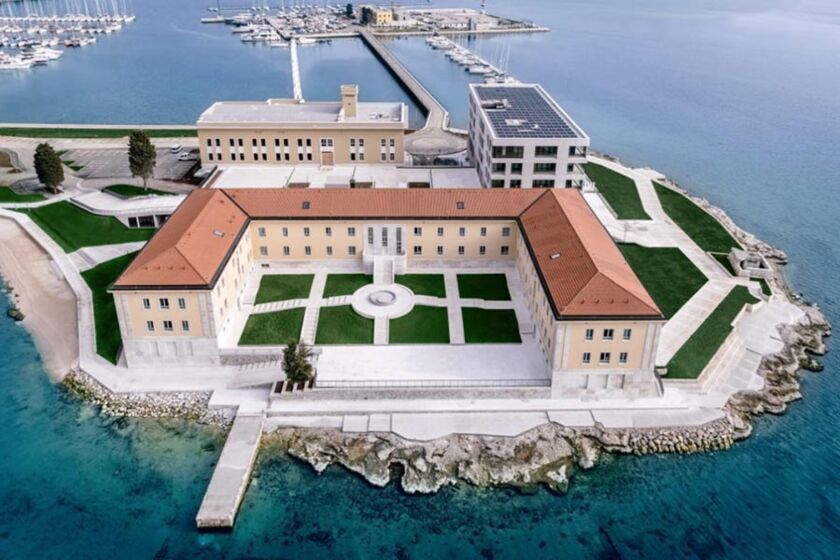
The Future of Luxury Lies in the Past
Today's modern guest increasingly seeks an experience with deeper context — a space with identity. This is precisely why the perception of luxury is shifting, from something that is owned to something that is lived. The combination of authenticity, story, and sustainability is thus becoming the new standard. Guests want to know where they are staying, what that space represents, and how it fits into the local community and environment. They want an experience that is not generic, but connected to the destination and its past.
Unlike newly built hotels, which frequently follow global templates and standards, heritage hotels offer a concept whose fundamental value lies in uniqueness — in architecture, in details, and in an atmosphere that cannot be artificially created. It is precisely this irreproducibility that becomes the key competitive advantage in an increasingly saturated luxury tourism market.
Heritage hotels are therefore not a passing trend, but an evolution of luxury. They respond to the needs of contemporary travellers who, alongside a high level of comfort, seek an experience that connects and carries meaning. In this context, Monumenti Heritage Hotel & Resort represents a clear example of the direction in which luxury tourism is developing.
On the grounds that unite historical legacy, there now stands a complex that offers guests an authentic experience — one in which every element of the space has its own function and story.
In a world that is changing ever faster, it is projects like this that show that the future of luxury lies in a thoughtful return to the past. Hotel Monumenti does not offer only high-category accommodation, but an experience with context, continuity, and value — confirming that the heritage hotel is not merely a trend, but a sustainable and long-term relevant model of luxury tourism.
