




In contemporary hospitality, a brand can no longer communicate exclusively through amenities, square footage, or service level — it must offer more: a feeling, a context, and a reason why guests should choose that particular hotel. This is the area where storytelling takes on a key role. It gives a hotel a character that transforms it from an anonymous space into a place with identity, enabling guests to connect with it on a personal level.
Rather than simply stating what it offers, a hotel uses stories about its space, people, design, and experiences to create a complete brand image and demonstrate who it is and who it is for. This approach is particularly relevant today, when decisions are increasingly made through impression and emotion.
Digital channels — websites and social media — also play an important role, becoming the guest's first point of contact with the hotel's story. Through visuals, tone of communication, and content that conveys atmosphere, values, and real experiences, the hotel builds the experience and stirs anticipation even before arrival. That first impression is often decisive, as it enables the guest to recognise whether the place matches their desires and way of travelling.
What Is Storytelling in Hospitality?
Storytelling in hospitality is not merely a form of communication, but the thoughtful shaping of a hotel's identity through everything the guest sees, feels, and remembers. It is the way a brand communicates and promotes the overall experience of a stay.
Unlike conventional promotion that emphasises amenities, category, or price, storytelling gives a hotel character and emotional depth — helping the guest experience the hotel not just as a place to sleep, but as a space with identity and a unique story. That story can be told through history, the inspiration behind the interiors, the relationship with the local community, through gastronomic experiences, or through the way staff convey the spirit of the place in their everyday interactions with guests.
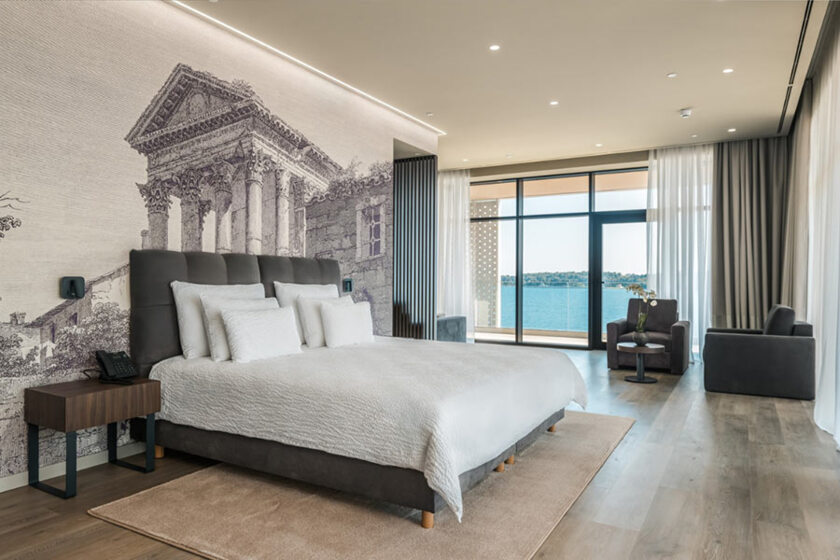
At Hotel Monumenti, this story is further expressed through the way the historical context of the location has been woven into the space and its atmosphere. History is not merely present in the design — it is felt throughout the entire experience of the stay. Gastronomy also plays an important role, offering a reinterpretation of Istrian and Mediterranean flavours in a contemporary way. Through local ingredients and familiar recipes, guests discover the region through taste. In this way, both the space and the food together tell the same story.
An authentic story emerges from the people who create the hotel and from the broader cultural and social context in which the hotel operates. That is why good storytelling does not feel like a marketing add-on, but as a natural extension of the hotel's identity — when it is consistently present from the first online interaction through to the stay and departure.
The Psychology of Memory: Why the Story Stays
The way guests remember the experience of a stay is not based on facts, but on the emotions they felt. People do not remember technical specifications — they remember the feeling they had, the moments that surprised them, the atmosphere of the space, and the personal experiences they lived through. It is precisely for this reason that individual moments become the key elements that remain in long-term memory and shape the perception of a hotel.
Through a story, a guest does not merely receive information — they identify with it, recognise themselves in it, and develop a sense of connection with the place. The power of storytelling lies in its ability to transform messages into experiences that are easily remembered. Rather than abstract values and generic descriptions, a story shapes them into real moments.
The same applies to gastronomic moments, which are far more than just a food offering. The flavours of Istria and the Mediterranean come not only through recipes, but through the story of the region, the season, and the people behind each dish. Local ingredients — freshly harvested or pulled from the sea — carry the character of the region and create an experience that the guest perceives with all the senses. It is precisely this Istrian moment — a combination of authenticity, simplicity, and refinement — that adds further depth to the overall stay.
Stories stay with us, while information is forgotten. What is felt is remembered long after, and passed on through recommendations, the sharing of experiences, and the personal accounts of guests. At Hotel Monumenti, every element — from the space to the gastronomy — becomes part of the story that the guest carries with them.
Heritage Hotels as Natural Storytellers
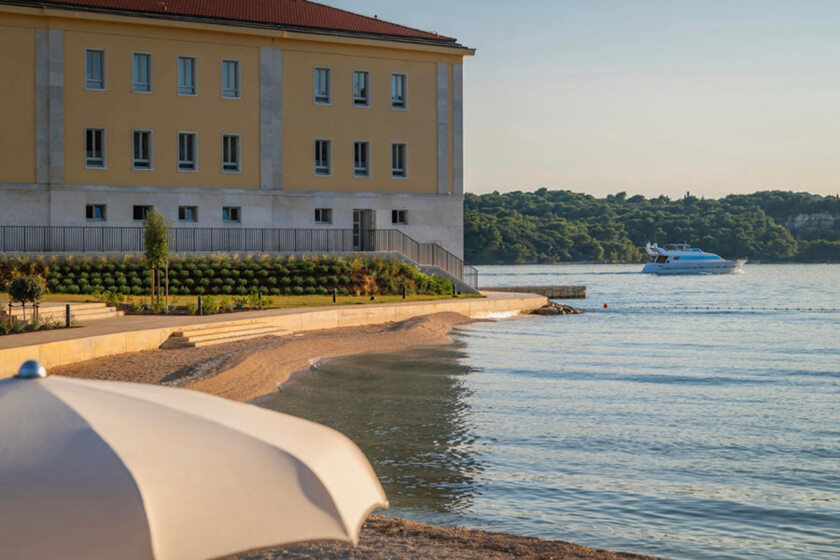
Unlike newly built properties, the identity of a heritage hotel is already woven into its architecture, history, and the context of the space — carrying the traces of the era in which the building was created, lending additional depth to the experience of a stay. In such an environment, the guest is not merely a passive observer, but actively participates in the continuity of a story that has endured for decades. This is why heritage hotels naturally create a stronger emotional connection and offer an authenticity that cannot be replicated.
Storytelling then emerges from the real history of the space and the way in which it has been reinterpreted in a contemporary experience — as is the case with Monumenti Heritage Hotel & Resort, situated on the site of a former Austro-Hungarian military barracks, where the historical structure has been carefully preserved and integrated into a new concept. The interior is conceived not to compete with the history of the space, but to accentuate it, creating an atmosphere that feels refined and natural.
Special attention has been paid to details that further build the narrative of the space — from lighting that highlights the textures of the walls to carefully selected furniture and decorative elements that reflect local identity. The outdoor spaces and surroundings further complement the experience, creating a sense of connection with the destination and its history.
In this way, the hotel functions not merely as a place to stay, but as a complete experience in which past and present naturally intertwine. It is precisely this integration of architecture, design, and story that enables a stay to become more than accommodation — transforming it into an experience with continuity, character, and a clearly recognisable identity.
Storytelling as Differentiation in the Luxury Segment
In contemporary luxury hospitality, the boundaries between offerings are becoming less and less pronounced. Most hotels offer a premium spa, a fine dining experience, and a carefully designed interior. Standards are high, and differences in amenities are increasingly difficult to distinguish. This is precisely why differentiation no longer stems from what a hotel has, but from what it represents.
What truly sets a hotel apart is its identity. The authenticity of the space, the story behind it, and the context in which it operates become the key elements in the perception of value. Today's guest does not choose only a level of comfort — they seek an experience that has meaning and that can be connected to their own values.
Storytelling in this sense becomes a decisive factor in the decision-making process. Between several similar options, it is the narrative that often determines the choice, because it creates an emotional advantage that is difficult to quantify but easy to feel.
Hotels that successfully communicate their story not only attract attention, but achieve a higher level of engagement, stronger loyalty, and a greater likelihood of direct bookings. Storytelling thus becomes the bridge between emotion and decision, between impression and real business results.
The Future of Luxury: Experience Over Infrastructure
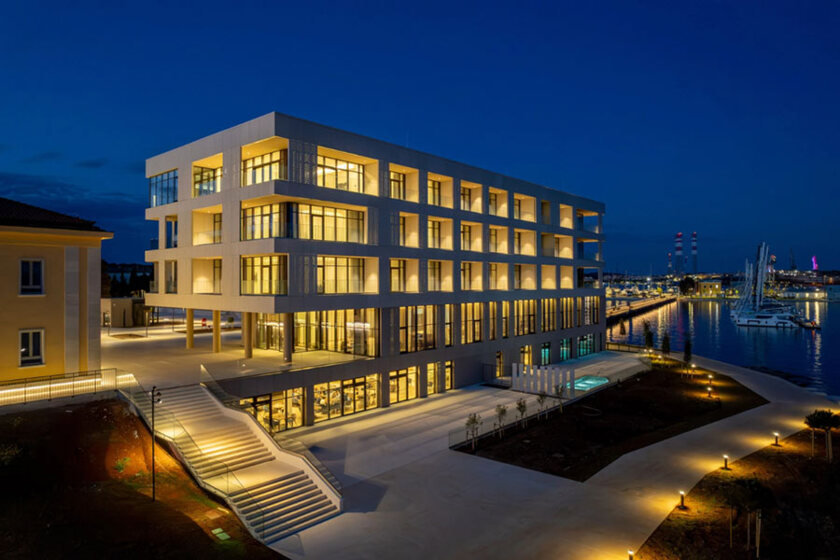
Luxury in hospitality is undergoing a clear transformation. The focus is shifting away from infrastructure and increasingly towards the experience a hotel can provide. Room size, the level of facilities, or the number of amenities are no longer sufficient in themselves. Today's guests seek personalisation, emotional value, and authenticity — elements that transcend the physical space and its characteristics and enter the realm of lived experience.
In this context, what is increasingly referred to as emotional luxury is emerging. It is the feeling of connection with a place, of understanding its context, and of an experience tailored to the individual. Guests want a stay that has meaning, that inspires them and leaves a lasting impression even after departure. Storytelling plays a key role in this, enabling the hotel to clearly communicate and convey that value across all touchpoints — from digital channels to the stay itself. It connects and creates a coherent story that gives the guest the feeling of being part of something greater.
Storytelling in hospitality is no longer an added value, but a fundamental component of a brand that shapes the way a guest perceives, experiences, and remembers a stay. In an environment where standards are high, it enables a hotel to stand out from the crowd and to have a clearly recognisable identity.
Through an authentic and consistently guided narrative, a hotel ceases to be merely a place to sleep and becomes an experience with meaning, context, and emotional value. This approach enables the guest to connect with the place on a personal level, which in the long term results in greater loyalty, recommendations, and a stronger brand perception.
Guests will not remember square metres or specifications — they will remember the feeling they took with them. That is why hotels that know how to tell their story offer far more than a stay; they create an experience that endures long after departure. It is precisely in these nuances that the difference lies between a night's accommodation and an experience that is remembered for a long time to come.
